
The Art Buyer gallery are delighted to show works by Katie of Mabel & Co. Katie creates hand-thrown ceramics in Mabel & co’s Suffolk-based studio, taking inspiration for the natural surroundings. We interview Mabel & Co on their origin, pottery process and sustainability.
How did ‘Mabel & Co’ come into fruition. We’d love to know the origin story.
That’s quite a long one! So let’s try and do the short version… about 10 years ago James & I travelled to the Isle of Lewis to rescue an old Harris Tweed weaving loom, from an abandoned croft. We brought it back to our studio and set about restoring it. The whole process took much longer than anticipated and along the way we got a bit sidetracked by letterpress printing, photography and pottery, so now we divide our time among the different aspects of the studio.
How were you introduced to the medium of clay?
I have had a long love of studio pottery that goes back over 20 years, when we funded our way through university by buying and selling ceramics from British potters, usually historical figures like Bernard & Janet Leach, Lucy Rie etc. This interest bubbled along for many years and then when I was able to work on Mabel & Co fulltime I set up my own pottery studio at home, which allowed me the space to explore my practice and develop my processes and style.
What drew you to working with your materials?
I love rough, textured clay! The way it throws is quite unlike anything else and has a solidity and earthiness. Very refined clay doesn’t look or feel like clay you would find in nature, which tends to have sand and other matter within it. My clay, which has a high grog content, matches this and because I glaze sparingly, this forms a large part of the piece. I always get people to handle my pots and run their fingers over them, because you get this amazing contrast of the rough clay, mid texture white glazes and then the very smooth runs of what I call the ‘clear water’ glaze.
How do you approach starting each new piece; do you have a routine in your working space to begin making?
I’m a very instinctive (some might say impulsive) thrower. I have a broad idea of the size and shape, but then allow myself the freedom to see what comes in that moment. So much will inform the final shape, from the way the clay reacts to my hand or how I am feeling, to technical aspects such as the water content and even if the clay is fresh.
‘Mabel & Co’ covers a range of art practices and materials, how does this play out day-to-day?
Sustainability and artisan practices seem inherent to your work, we’d love to hear what your motivations and passions are.
–
View the Mabel & Co collection

Mabel & Co collection at The Art Buyer gallery
My Life in Art- Katie from Mabel & Co
First piece of art you bought?
Going to go with my first painting, which was by our friend Anna Mac.

Anna Mac- Colour & Composition Study No. 7. Photo courtesy of Mabel & co.
Favourite Artist?
Lisa Milroy- 1980s/90s artifact works.
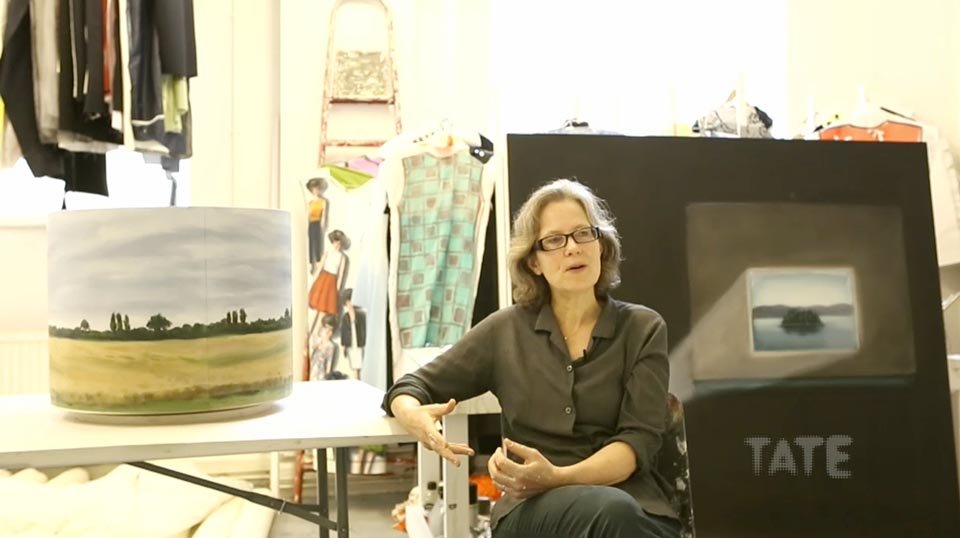
Lisa Milroy b. 1959. Image credit: TATE.
If you could own any piece of art (even if you have to rob a bank or museum!), what would it be and why?
Sticking with Lisa Milroy and one of her lightbulbs series.

Lisa Milroy – Lightbulbs 1988. Image credit: Lisa Milroy website.
More like this...